
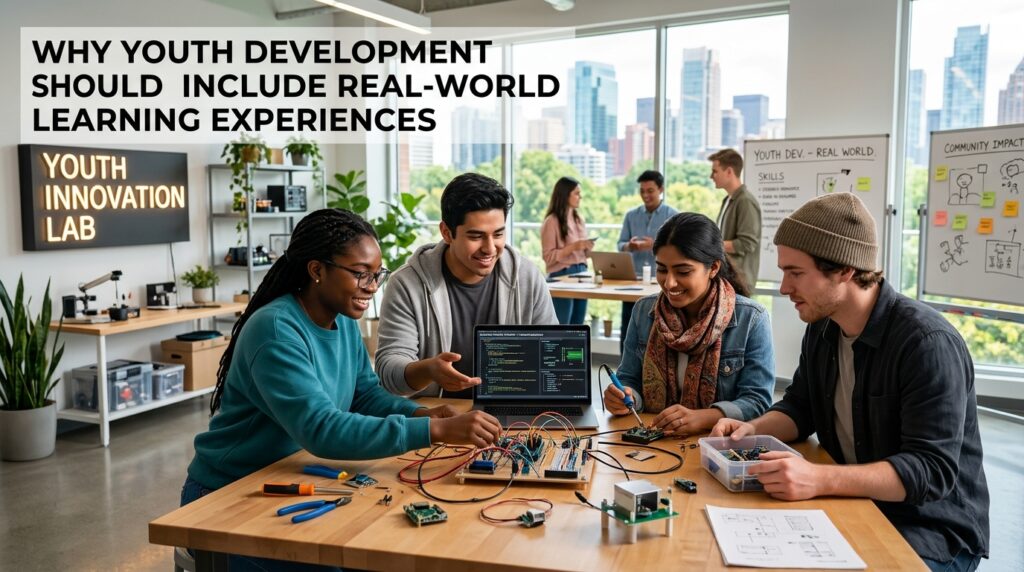
Education plays an important role in helping young people prepare for adulthood, but learning should not be limited to textbooks, lessons, and classroom discussions. Teenagers also need opportunities to apply what they know in everyday situations, interact with different people, solve practical problems, and experience new responsibilities. Real-world learning experiences can help connect academic knowledge with the skills young people need in their personal, educational, and professional lives.
Youth development programs can provide valuable opportunities for this type of learning. Through community activities, volunteering, mentorship, sports, group projects, and practical experiences, young people can discover how different skills work outside a traditional classroom. These experiences help them develop confidence, independence, communication, and a better understanding of the world around them.
Connecting Classroom Knowledge With Everyday Life
Classroom learning provides young people with important information, but applying that information in real situations helps deepen their understanding.
For example, a student may learn about budgeting in a mathematics lesson. However, planning the costs of a small community activity can help them understand how budgeting works in practice. Similarly, learning about communication in school becomes more meaningful when a teenager has to explain an idea, participate in a group discussion, or resolve a misunderstanding.
Real-world experiences give young people opportunities to test what they have learned.
They can see how academic knowledge connects with everyday responsibilities and understand why certain skills are useful beyond school.
Developing Practical Problem-Solving Skills
Not every problem comes with clear instructions or an immediate answer.
Young people may encounter unexpected situations while participating in community projects, organizing activities, or working with other people. They may need to adjust a plan, find missing information, divide responsibilities, or consider alternative solutions.
These situations encourage practical thinking.
Instead of memorizing how a problem should be solved, teenagers learn to examine the situation and decide what action makes sense.
For instance, if a group activity does not have enough supplies, participants may need to identify what is available, discuss alternatives, and reorganize their plans.
Experiences like these help young people become more comfortable handling unfamiliar challenges.
Building Confidence Through Hands-On Activities
Confidence often grows when young people discover that they can complete tasks independently.
Hands-on activities provide opportunities to practice skills and see the results of personal effort.
A teenager who helps organize a community event may initially feel uncertain about communicating with participants or managing responsibilities. After gaining experience, they may become more comfortable speaking with others and handling similar tasks.
The same can happen through practical workshops, sports activities, volunteering, and youth-led projects.
Each successful experience can help young people recognize their abilities and become more willing to try something unfamiliar.
Learning the Importance of Teamwork
Many real-world situations require people to work together.
Community projects, volunteer activities, sports teams, and group assignments can show teenagers how individual contributions affect a shared outcome.
They may need to listen to different opinions, divide responsibilities, communicate progress, and support other participants.
These experiences can also teach young people that teamwork involves more than simply being part of a group. It requires reliability, cooperation, and respect for other people’s contributions.
When disagreements occur, teenagers have opportunities to practice discussing differences and finding solutions.
These skills can later support them in educational environments, workplaces, and community relationships.
Understanding Responsibility Through Experience
It can be difficult for young people to understand responsibility when they only hear adults talk about it.
Practical experiences make responsibility more visible.
For example, a teenager who volunteers to help prepare an event may need to arrive on time, organize materials, follow instructions, and complete assigned tasks. Other participants may depend on that contribution.
This creates a direct connection between personal actions and group outcomes.
Young people begin to understand that being responsible means following through on commitments and recognizing how their behavior affects others.
These lessons can help prepare them for greater independence as they grow older.
Community Involvement Creates Meaningful Learning Opportunities
Communities provide many opportunities for young people to learn through participation.
Local events, educational activities, neighborhood projects, and volunteer initiatives can introduce teenagers to situations they might not encounter during ordinary school routines.
For example, helping with a community event may teach organizational skills, while participating in a neighborhood improvement project can introduce ideas about cooperation and civic responsibility.
Young people can also meet individuals with different experiences, interests, and professional backgrounds.
These interactions may introduce new perspectives and help teenagers understand how different people contribute to their communities.
Through community mentorship and youth development, young people can benefit from relationships and experiences that extend beyond traditional educational settings.
Mentorship Helps Turn Experiences Into Lessons
Participating in an activity is valuable, but reflecting on the experience can make the learning even more meaningful.
Mentors can help young people understand what they gained from a particular situation.
After completing a group project, for example, a mentor might discuss what went well, which responsibilities were difficult, and what could be improved next time.
A teenager who initially sees an activity as simply another task may begin to recognize the communication, planning, leadership, and problem-solving skills involved.
Mentors can also help young people connect these lessons with their personal interests and future goals.
This is one reason youth mentorship can complement practical learning experiences. Guidance helps teenagers make sense of what they encounter and consider how to use those lessons in other areas of life.
Exploring Interests and Possible Career Paths
Young people do not always know which subjects, activities, or professions interest them.
Real-world experiences can help them explore different possibilities before making important decisions about their future.
A teenager interested in technology might enjoy a practical workshop. Someone who likes helping others may discover an interest in community service. Another young person might enjoy organizing activities and become interested in event planning or leadership.
These experiences do not need to determine a teenager’s future career.
Their purpose is to provide exposure and help young people discover what they enjoy, what they find challenging, and which abilities they would like to develop further.
This can make future educational and career decisions more informed.
Preparing Young People for Workplace Expectations
Future employment involves more than academic qualifications.
Young people also need practical abilities such as communication, punctuality, organization, cooperation, adaptability, and problem-solving.
Real-world learning experiences can introduce these expectations in manageable ways.
For example, a volunteer project may require teenagers to follow a schedule and coordinate with others. A youth-led activity may involve assigning tasks, managing time, and communicating updates.
These experiences can help young people understand what it means to contribute responsibly in a shared environment.
They may also become more comfortable taking initiative and asking questions when they do not understand something.
Learning Through Sports and Physical Activities
Sports can provide another valuable form of real-world learning.
Participation in organized sports can teach young people about preparation, teamwork, discipline, fair play, and responding to both success and disappointment.
A player may learn that individual performance affects the entire team. They may also discover the importance of practice, listening to instructions, and supporting teammates during difficult moments.
These lessons extend beyond the playing field.
The values developed through organized activities can support personal growth, relationships, and future responsibilities.
The benefits of sports for youth development demonstrate how participation can contribute to character development and practical life skills.
Learning to Adapt When Plans Change
Real-world situations are not always predictable.
An activity may take longer than expected, a team member may become unavailable, or an original plan may no longer work.
These situations give young people opportunities to practice adaptability.
Instead of becoming discouraged whenever something changes, teenagers can learn to review their options and make adjustments.
This ability is particularly important because adulthood often involves responsibilities and circumstances that cannot be controlled completely.
Learning to remain flexible while still working toward an objective can help young people become more prepared for future challenges.
Encouraging Independence Without Removing Support
Real-world learning should give young people opportunities to make decisions and take responsibility, but that does not mean leaving them without guidance.
Adults still have an important role in creating safe and supportive learning environments.
Mentors, educators, coaches, and program leaders can explain expectations, provide resources, and offer assistance when necessary.
At the same time, they should allow teenagers to attempt appropriate tasks independently.
This balance gives young people room to develop their judgment while knowing that support is available if they encounter difficulties.
Over time, they can become more confident in handling responsibilities without relying on adults to make every decision.
Why Youth Programs Should Make Practical Learning a Priority
Youth development programs have an opportunity to provide experiences that complement formal education.
Workshops, community projects, volunteering, leadership activities, mentoring sessions, and collaborative assignments can help teenagers practice skills in meaningful situations.
A well-designed program should not focus only on keeping young people occupied. It should give them opportunities to participate, contribute, make decisions, and reflect on what they learn.
Organizations such as Protégé Project can support this approach through mentorship, education, leadership development, and positive community involvement.
Combining guidance with practical experiences can help young people develop skills that are relevant to their everyday lives and future opportunities.
Building a Stronger Foundation for the Future
Young people benefit when learning takes place in different environments.
Classrooms provide knowledge, while practical experiences help teenagers understand how to apply that knowledge when working with people, managing responsibilities, and responding to challenges.
Real-world learning can strengthen communication, teamwork, problem-solving, independence, and confidence. It can also help young people discover new interests and become more aware of possible future pathways.
The most valuable youth development experiences are those that give teenagers opportunities to participate actively rather than simply observe.
By combining education with mentorship and practical involvement, organizations and communities can help young people develop abilities that support them well beyond their school years.
Preparing young people for the future means giving them opportunities to experience it, practice useful skills, and learn from the world around them.