

Last Updated: November 2, 2026
Quick Summary
Youth leadership training for teenagers teaches decision-making, communication, accountability, and team coordination through repeated, low-stakes practice where a teen leads something real and small. Leadership is a set of learned behaviors, not a personality trait, so teens build these skills by doing rather than listening to lectures.
- Leadership skills develop from repeated, low-stakes reps where a teen leads something real and small.
- A strong curriculum sequences observation, assisted practice, independent leadership, then mentoring others.
- High schoolers disengage from activities that feel like busywork, so give them real problems and authority.
- Before committing, ask who leads sessions, the adult-to-teen ratio, outcomes, schedule, and cost in writing.
- The Protégé Project offers free before and after-school programming for boys ages 6-18.
Table of Contents
- What Youth Leadership Training for Teenagers Actually Teaches
- Why Leadership Training Matters for Teens
- Teen Leadership Activities That Build Real Skills
- What a Strong Youth Leadership Curriculum Includes
- Leadership Activities for High School Students
- How Teen Mentorship Programs Support Growth
- How to Choose the Right Youth Leadership Training for Teenagers
- Finding Free Leadership Programming for Your Son
- Frequently Asked Questions
What Youth Leadership Training for Teenagers Actually Teaches
Youth leadership training for teenagers is the structured practice of teaching young people how to communicate clearly, take responsibility for outcomes, and guide peers toward a shared goal. Leadership is a set of learned behaviors, not a personality trait a child is born with. Teenagers who practice these behaviors early carry them into adulthood.
The skills break into four practical categories:
- Decision-making under pressure, choosing a path when information is incomplete
- Communication, speaking to a group, listening actively, giving feedback
- Accountability, owning a task and its result, including failure
- Team coordination, assigning roles and trusting others to execute
What most guides miss is that none of these skills develop from a lecture. They develop from repeated, low-stakes reps where a teen leads something real and small.
Why Leadership Training Matters for Teens
Adolescence is the window when responsibility-taking becomes a habit rather than a chore. How youth leadership experiences prepare teens for adult responsibilities explains how these early experiences carry into adulthood. A teenager who learns to manage a group project, mediate a disagreement, or run a drill at practice builds a template for how they handle adult obligations later. The American Academy of Pediatrics guidance on adolescent development notes that supportive, structured environments are central to healthy adolescent growth.
Teens who practice leadership also tend to become more resilient, responsible, and motivated. That matters for the boys who are least engaged with school. Leadership roles give a disconnected 16-year-old a reason to show up that a lecture about grades never will. For a fuller case on early skill-building, see why leadership skills should be developed at a young age.
Teen Leadership Activities That Build Real Skills
The activities that work share one trait: they put a teen in charge of something with a visible outcome. A common mistake is filling a program with trust falls and motivational speeches. Those build memories, not skills.
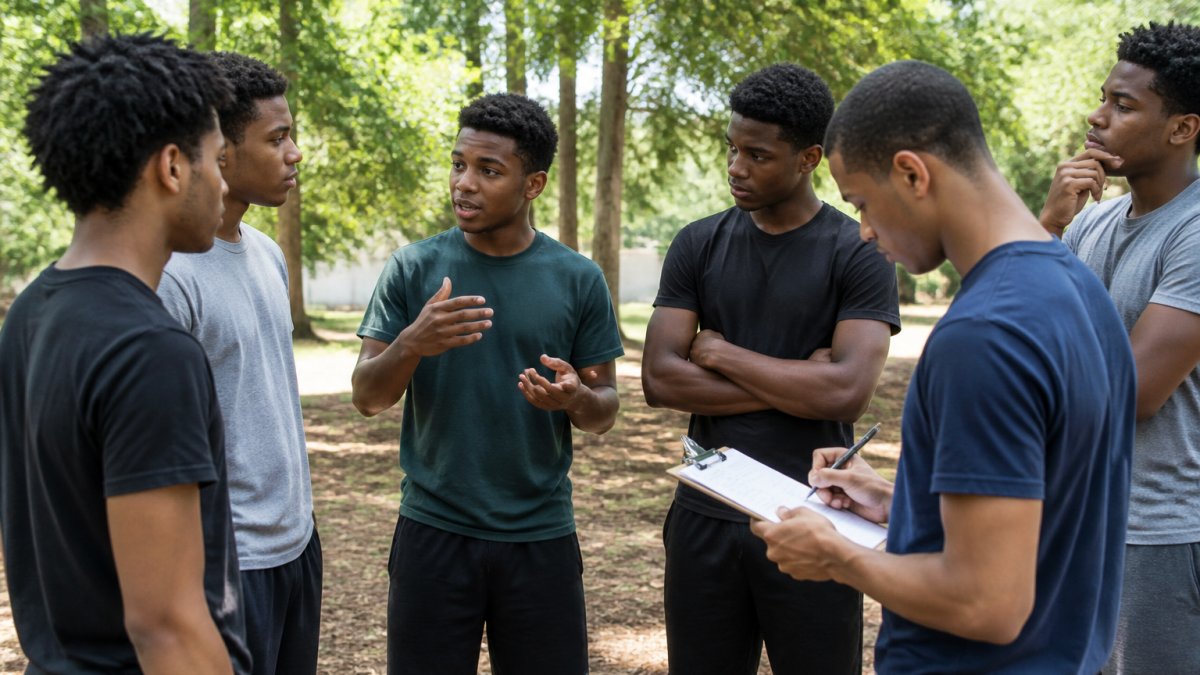
Better teen leadership activities include:
- Peer tutoring, a teen teaches a younger student a subject they know well
- Team captaincy, rotating leadership so every teen leads a practice or session
- Event planning, a teen owns logistics for a small community event
- Community service projects, teens choose the cause, plan the work, and report results
- Debate and public speaking, structured argument forces clear thinking
Community service is one of the strongest levers here. It moves teens from learning about leadership to practicing it. We cover this in depth in how community service helps young people develop leadership skills.
What a Strong Youth Leadership Curriculum Includes
A youth leadership curriculum should sequence skills, not stack unrelated activities. The strongest programs follow a progression: observation, then assisted practice, then independent leadership, then mentoring others.
A workable curriculum structure:
- Self-awareness and values, what kind of leader do I want to be
- Communication fundamentals, speaking, listening, conflict resolution
- Teamwork and roles, how groups divide work and hold each other accountable
- Decision-making, weighing options and owning consequences
- Service and community, applying skills beyond the program
- Mentoring, teaching a younger participant what you’ve learned
The last step is the one most curricula skip, and it’s the one that locks the skill in. A teen who has taught something knows it.
Leadership Activities for High School Students
High schoolers need leadership activities with real stakes and real autonomy. The activities that land best with this age group give them ownership and a genuine audience.
Options that work:
- Student government and club leadership, authentic responsibility for budgets and events
- Peer mentoring programs, older students supporting younger ones
- Sports team leadership, rotating captaincy rather than fixed hierarchy
- Internships and volunteer coordination, managing a schedule or a small team
- Public speaking and debate, competition sharpens communication fast
What most guides miss is that high schoolers disengage from activities that feel like busywork. Give them a problem worth solving and the authority to solve it, and the leadership behavior shows up on its own.
How Teen Mentorship Programs Support Growth
Teen mentorship programs pair a young person with a supportive adult or older peer who provides guidance while the teen builds their own skills. The relationship matters more than the curriculum. A mentor is the person a teen will ask for help when they’re stuck, and learning to ask for help is itself a leadership skill. This supportive dynamic creates a safe environment to build confidence in teenagers as they navigate the challenges of taking initiative and assuming new responsibilities.
The Mentoring.org resources from MENTOR outline how quality mentoring relationships are built and sustained. For a closer look at why this matters, read how mentorship can encourage teens to ask for help.
How to Choose the Right Youth Leadership Training for Teenagers
Choosing the right youth leadership training for teenagers comes down to five checks: who leads it, how it’s structured, how many kids per adult, what the outcomes look like, and whether it fits your family’s schedule.
Use this checklist before committing:
- Ask who runs the sessions and how mentors are screened
- Confirm the group size and the adult-to-teen ratio
- Ask what a typical session looks like, start to finish
- Request examples of how the program measures growth
- Confirm the schedule covers school breaks and weekends if you need it
- Check whether the program is free or what it costs, in writing
- Ask how long the program has operated and who funds it
A program that can’t answer these clearly is a program to skip. For a full breakdown of leadership development options, see our guide to leadership development for boys.
Run these checks before committing to any program.
| Check | What to confirm |
|---|---|
| Who leads it | Who runs sessions and how mentors are screened |
| Group size | Group size and adult-to-teen ratio |
| Session format | What a typical session looks like, start to finish |
| Outcomes | Examples of how the program measures growth |
| Schedule | Coverage of school breaks and weekends if needed |
| Cost | Whether it is free or what it costs, in writing |
| Track record | How long it has operated and who funds it |
Finding Free Leadership Programming for Your Son
Free leadership programming exists, but it takes some digging to find. Start with your local parks and recreation department, public library, school counseling office, and community centers, which often host or fund youth programs at no cost.
The Protégé Project offers free before and after-school programming for boys ages 6-18, coordinating services for North Michigan Park Recreation Center and Edgewood Community Center. Families can reach out to learn more.
Frequently Asked Questions
What does youth leadership training teach teenagers?
Youth leadership training teaches teenagers how to communicate clearly, make decisions under pressure, work with a team, and take responsibility for outcomes. Programs typically combine group activities, public speaking practice, and mentorship. Teens also learn goal-setting, conflict resolution, and how to lead peers without relying on authority. The skills transfer directly to school, sports, and future jobs, and they build confidence that lasts well beyond the program itself.
How can teenagers develop leadership skills outside the classroom?
Teen leadership activities outside school include volunteering, joining sports teams, leading a club project, or mentoring younger kids. Community programs and teen mentorship programs give teens structured chances to practice leading real tasks with adult guidance. Parents can also encourage small responsibilities at home, like planning a family outing or organizing a service project. Repetition matters more than intensity: regular, low-stakes practice builds leadership habits faster than one big event.
What are some leadership activities for high school students?
Leadership activities for high school students often include student government, debate, peer tutoring, service projects, and team sports. Many programs add workshops on public speaking, interviewing, and project planning. Older teens benefit from activities that mirror real-world responsibility, such as running a fundraiser or leading a volunteer team. Look for programs that give teens an actual leadership role rather than just attending lectures about leadership.
What should parents look for in a teen leadership program?
Check the program’s safety and screening process for mentors, group sizes, and whether staff are trained to work with teens. Ask how progress is measured, what a typical session looks like, and whether the program runs year-round. Confirm the program is free or transparent about costs, and ask about academic support alongside leadership activities. Visit in person if you can, and talk to other parents before committing your son’s time.
At what age should teenagers start leadership training?
Many programs start leadership training around age 11 or 12, though younger kids can build related skills through teamwork and responsibility. Teens aged 13 to 18 get the most from structured leadership curricula because they can reflect on their behavior and set goals. If your son is 16 and disconnected from school, look for programs that pair mentorship with hands-on activities rather than classroom-style lessons.
Finding a program that fits your son’s age, schedule, and needs takes effort. The Protégé Project exists to remove that barrier for families in the area, with free programming that combines mentorship, academic support, and sports, and a structured environment where every participant is seen and supported. Get started with The Protégé Project and give your son a place to build leadership, discipline, and confidence.
