

Last Updated: November 8, 2026
Quick Summary
To build confidence in boys, give them real responsibility, honest process praise, and safe chances to fail rather than easy compliments. Confidence grows when a boy proves to himself he can handle hard things, so let him struggle briefly before stepping in. Praise effort specifically, keep failure cheap and recoverable, and add mentors or structured programs for consistent outside support.
- Confidence is a skill built through repeated proof a boy can handle things, not a born trait.
- Confidence-building activities need a clear goal, a real audience, and a genuine chance of failure.
- Praise the process, not the person: “You worked hard on that” beats “You’re a genius.
- Respond to failure by naming it plainly, asking what he learned, and planning one small next step.
- The Protégé Project offers free before and after-school programming for boys ages 6-18.
Table of Contents
- Why Confidence Matters for Boys (and What Actually Builds It)
- Confidence-Building Activities for Boys That Work in Real Life
- How to Encourage Boys Without Turning Praise Into Pressure
- Positive Affirmations for Boys: What to Say and When It Lands
- Helping Boys Overcome Fear of Failure
- How Mentors and Structured Programs Build Confidence in Boys
- Enrolling Your Son in Free, Year-Round Mentorship and Sports Programming
- Frequently Asked Questions
Why Confidence Matters for Boys (and What Actually Builds It)
Confidence is not a personality trait a boy is born with.
Here is the problem most parents run into. They want their son to feel good about himself, so they praise everything.
What works instead is earned confidence.
Adolescence is the window where this matters most. You can read more about why building confidence during adolescence matters for the full picture.
Confidence-Building Activities for Boys That Work in Real Life
The best confidence-building activities for boys share three traits: a clear goal, a real audience, and a genuine chance of failure. Video games and trophies for showing up do not build confidence. They build comfort.
Try these in the neighborhood or at home:
- A fix-it job: Let him repair a bike chain, patch a wall, or build a shelf.
- A service role: Have him walk a neighbor’s dog or help an elderly relative.
- A teaching moment: Ask him to teach you something he knows well.
A common mistake is stepping in too fast. When he struggles, wait. Let him sit in the discomfort for a minute. That minute is where confidence grows.
Sports, Service, and Skill-Building: Three Reliable Confidence Engines
Three engines carry most of the load: sports, service, and skill-building. Each gives a boy a different kind of proof.
Sports teach a boy how to compete and recover. Research on how sports build character and courage in youth shows the payoff goes well beyond fitness.
Service teaches him that he matters to other people, a quiet but strong form of confidence.
Skill-building gives him something concrete to point at. A finished project is proof he can finish.
Stack all three and you get a boy who trusts his own effort. That is the whole game.
How to Encourage Boys Without Turning Praise Into Pressure
Praise the process, not the person. “You worked hard on that” beats “You’re a genius” every time, because effort is something he controls.
Watch for these traps:
- Overpraising talent. It makes him fear losing the label.
- Praising only results. It teaches him that a loss means he failed as a person.
- Comparing him to siblings or friends. It turns praise into a competition.
Try specific praise instead. “You kept going after you missed that shot” tells him exactly what to repeat.
The goal is a boy who says I did that rather than I’m great. One is a fact he earned.
Positive Affirmations for Boys: What to Say and When It Lands
Positive affirmations for boys work best when they are specific and believable. A boy will reject a vague “You can do anything” because he knows it is not true.
Timing matters just as much. Say it right after the moment, not hours later.
Here is what lands:
- After effort: “You didn’t quit when it got hard.”
- After honesty: “Telling the truth there took guts.”
- After recovery: “You bounced back fast.”
Skip the empty slogans. Boys spot fake encouragement quickly, and it teaches them to tune you out. Keep it short, true, and tied to something he actually did.
Helping Boys Overcome Fear of Failure
Helping boys overcome fear of failure starts with changing what failure means in your house. If a mistake gets a lecture, he learns to avoid risk. If a mistake gets a calm question, he learns to try again.
Try this three-step response when he fails:
- Name it plainly. “That didn’t work.” No drama, no lecture.
- Ask what he learned. Let him find the lesson himself before you offer one.
- Plan the next try. One small, specific step forward, not a full restart.
Watch out: rescuing him too soon does more damage than the failure itself. When you fix every problem, you quietly tell him he cannot handle it.
What Fear of Failure Actually Looks Like at Different Ages
Fear of failure rarely announces itself. It shows up as avoidance, excuses, last-minute stomachaches, or sudden disinterest in something he used to love. The trigger changes with age:
- Ages 6-8: He may refuse to try a new sport or game because he cannot yet separate “I lost” from “I’m bad.” Keep the stakes tiny and the repetition high.
- Ages 9-12: Peer comparison kicks in. He may quit an activity the moment he is no longer the best. Point to his own past performance, not the kid next to him.
- Ages 13-18: Fear of judgment dominates. He may avoid trying out, speaking up, or asking for help because a public miss feels permanent. Give him low-stakes rehearsal time before high-visibility moments.
Scripts That Lower the Stakes
Specific language matters more than general encouragement. Try these in the moment:
- After a loss: “What part of that went the way you wanted?”
- Before a tryout: “Your job is to show up and compete. The result is not your job today.”
- After a public mistake: “That was uncomfortable. You handled it and it’s over. What’s the next move?”
A boy who fears failure often fears judgment more than the task. Keep your reaction steady and he will start treating mistakes as information, not verdicts. That shift alone changes how he approaches school, sports, and friendships.
Building a Failure-Friendly Routine
Confidence grows fastest when failure is built into the schedule rather than treated as an emergency. A few practical habits help:
- Set a weekly stretch task. Something he is likely to struggle with, a harder math problem, a new recipe, a longer run, so failure becomes routine rather than catastrophic.
- Debrief, don’t grade. Ask two questions after any attempt: What worked? What would you change? Skip the verdict.
- Model your own misses. Say out loud when you fail at something and what you plan to do next. Boys copy what they see more than what they hear.
If your son is enrolled in a sport, camp, or club, tell the coach or instructor that you are working on failure recovery at home. Coaches are often willing to reinforce effort language when they know it matters to the family.
How Mentors and Structured Programs Build Confidence in Boys
Mentors build confidence by offering something parents cannot fully provide: a second adult who believes in a boy and holds him to a standard.
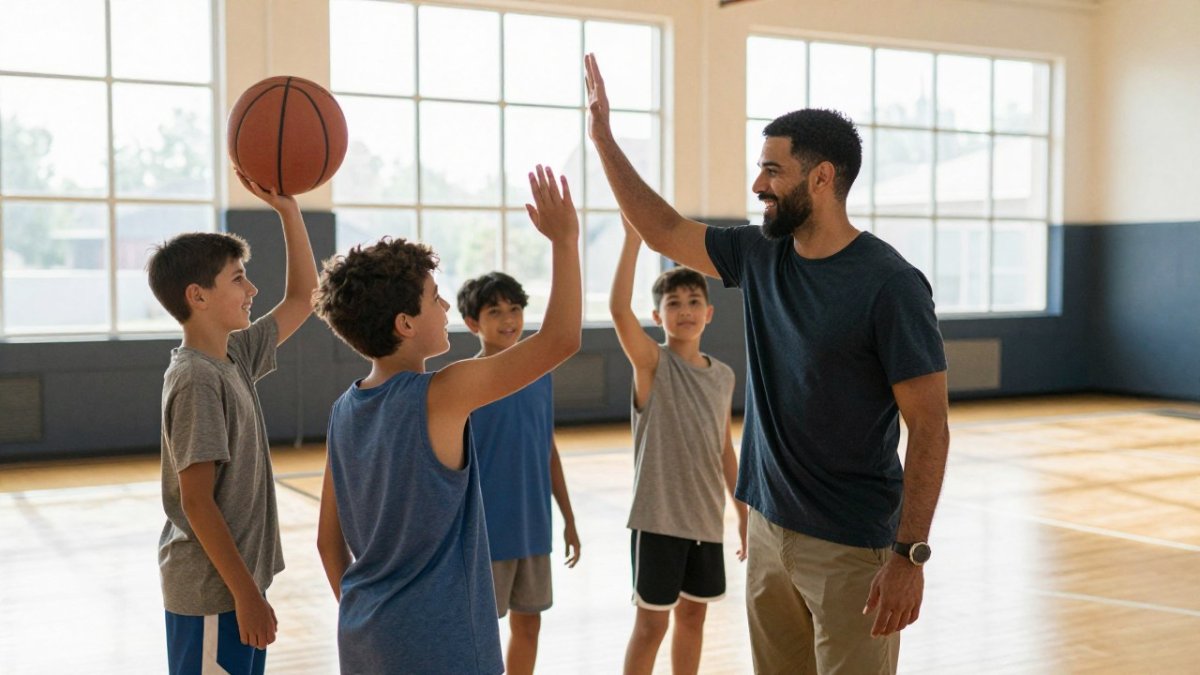
A mentor does three things well. He shows up consistently. He gives honest feedback. He expects effort, not perfection.
Structured programs add routine and a safe space. See a real example of how mentorship builds confidence in boys to understand the model in action.
The difference between a good program and a great one comes down to consistency.
Choosing the Right Program: A Decision Guide
Many parents compare programs on a single factor, such as distance or cost. A better approach is to match the program to what your son actually needs right now. Use these five criteria side by side:
- Age range and grouping. Confirm the program serves his exact age and how it groups boys (by age, grade, or skill). Mixed-age groups can be great for mentorship but rough for a shy younger boy.
- Recreational vs. competitive. Recreational programs prioritize participation and skill exposure. Competitive clubs prioritize performance and require tryouts. A boy rebuilding confidence often does better in recreational play first.
- Schedule and season length. Year-round programming builds routine; seasonal programs suit boys who need a defined commitment. Check whether the program runs through school breaks.
A Step-by-Step Enrollment Walkthrough
Provider pages often jump straight to a sign-up button. Here is the fuller process most families actually go through:
- Confirm eligibility. Check age range, residency or school requirements, and whether the program accepts boys from outside the immediate neighborhood.
- Choose a location. Pick the site closest to home or school, and confirm transportation options if you cannot drive.
- Ask about schedule and capacity. Confirm start dates, meeting days, and whether a waitlist is in effect.
- Gather required documents. Most programs ask for proof of age, emergency contact information, medical or allergy details, and a signed permission form. Some request proof of residency.
- Complete registration. This may be online, in person, or by phone. Ask for a confirmation and the name of the staff member who enrolled your son.
- Prepare basic equipment. Comfortable clothes and closed-toe shoes cover most programs. Ask before buying anything specialized.
- Attend the first session early. Arriving a few minutes early lets him meet the mentor before the group forms, which lowers first-day anxiety.
Watch out: a full program is not a closed door. Ask to be placed on the waitlist and follow up every two weeks, spots open when families move or schedules change.
Waitlists, Cancellations, and Late Registration
Practical questions come up fast once you start enrolling. Ask these before you pay or commit:
- What is the refund and transfer policy? Get it in writing, especially for seasonal programs.
- Is there a late-registration window? Many programs accept boys after the start date if space allows.
- How are cancellations handled? Weather cancellations, coach changes, and site closures should be communicated in advance.
What to Ask Before You Commit
A short list of questions separates a good program from a great one:
- Who is my son’s mentor or coach, and will that person stay all year?
- How do you handle a boy who is struggling or acting out?
- What does a typical session look like, minute by minute?
The man is American.
When comparing programs, weigh these five criteria side by side rather than judging on distance or cost alone.
| Criterion | What to check | Why it matters |
|---|---|---|
| Age range and grouping | Exact age served; grouped by age, grade, or skill | Mixed-age groups can be rough for a shy younger boy |
| Recreational vs. competitive | Participation focus vs. performance and tryouts | Boys rebuilding confidence often do better in recreational play first |
| Schedule and season length | Year-round vs. seasonal; runs through school breaks | Year-round builds routine; seasonal suits boys needing defined commitment |
| Cost and financial assistance | Registration fees, uniform costs, scholarships, fee waivers | Some community and nonprofit programs offer free or reduced-cost spots |
| Adult-to-child ratio and consistency | Adults per group; same mentor or coach all year | Consistency affects how much a mentorship program helps |
Enrolling Your Son in Free, Year-Round Mentorship and Sports Programming
At The Protégé Project, we offer free before and after-school programming for boys ages 6-18, blending mentorship, academic support, and sports. By pairing mentorship, academic support, and sports with conversations about handling setbacks, we help boys build confidence that lasts beyond the program, and Fit Dad Community offers another perspective on nurturing emotional resilience at home.
Here is how to get started:
- Check eligibility. Boys ages 6-18 in the target area qualify. Contact us to confirm.
- Pick a location. Choose the recreation center closest to home or school.
- Ask about schedules. Contact us to confirm meeting days and availability.
- Sign up. Contact us to confirm space and start dates.
- Show up ready. Comfortable clothes and a willingness to try are enough.
For families who want more options, our guide to free after-school sports for boys and our roundup of youth sports programs in the area can help you compare schedules.
Confidence does not come from a pep talk. It comes from a boy proving to himself, week after week, that he can show up and do the work.
Your son does not need to be fixed. He needs a place where effort is expected and support is steady.
Frequently Asked Questions
How can I help a boy build confidence?
Start with specific, earned praise rather than generic compliments. Name exactly what he did: “You kept trying after you missed that shot.” Give him real responsibilities, like leading a task or teaching a younger sibling a skill, so he sees himself as capable. Sign him up for structured activities where he can measure his own progress, such as sports, tutoring, or mentorship programs. Confidence grows from evidence, so create regular chances for him to earn small wins and then reflect on them out loud with him.
What activities help boys develop self-confidence?
The strongest confidence-building activities for boys share three traits: a clear skill to practice, feedback from an adult who is not a parent, and a visible measure of progress. Team sports, martial arts, music lessons, and service projects all fit. So does tutoring, because academic improvement gives boys a concrete reason to believe in their own ability. Programs that combine sports with mentorship and academic support can give boys praise from coaches and mentors as well as from parents.
How do you help a boy handle failure and setbacks?
Separate the outcome from the effort. After a loss or a bad grade, ask what he learned and what he would try next time before offering your own opinion. Share a story about a time you failed and recovered, so he sees that setbacks are normal rather than shameful. Avoid rescuing him from every difficult moment; letting him work through a manageable challenge builds resilience. Helping boys overcome fear of failure works best when the adults around him treat mistakes as information, not as verdicts on his character.
What should I say to a boy who lacks confidence?
Skip the pep talk and point to evidence instead. Say something like, “Remember when you were nervous about the tryout and you went anyway? That is the same thing you are doing now.” Use positive affirmations for boys that are specific and believable, such as “You handle hard things” or “You are someone your teammates count on.” Then follow up with a concrete next step, like signing up for a program or practicing a skill for 15 minutes. Action, paired with honest encouragement, changes how a boy sees himself faster than praise alone.
