

Last Updated: October 28, 2026
Quick Summary
Mentorship programs for at-risk youth pair a young person with a consistent, caring adult who offers guidance, encouragement and a steady point of contact outside the home and school. Programs may set goals around school engagement, peer relationships and routines, and parents can ask how progress is assessed.
- Mentoring is not tutoring and it is not supervision.
- Check the program’s age band first, since younger and teen programs can differ.
- Ask for the screening policy, supervision rules and complaint procedure in writing.
- A program that cannot explain its process in plain terms is a warning sign.
- Score each program on what they told you, what they showed in writing, and what they could not answer.
Table of Contents
- What Mentorship Programs for At-Risk Youth Are Designed to Do
- Who These Programs Serve and How Youth Are Matched With Mentors
- How to Find a Mentor for a Child
- One-to-One Youth Mentoring vs. Group Models
- Youth Mentoring Program Safety Standards and Background Screening
- Questions to Ask a Youth Mentoring Program Before Enrolling
- Enrolling Your Son in a Mentorship Program This Year
- Frequently Asked Questions
Mentorship programs for at-risk youth pair a young person with a consistent, caring adult who offers guidance, encouragement and a steady point of contact outside the home and school. For a parent weighing their options, the question is rarely whether mentoring helps in principle. A parent’s guide to mentorship programs for boys in DC covers how to compare local options for a son. It is which program fits a particular child, how the adults are screened, and what the commitment will look like week to week. The sections below walk through how these programs are designed, how to choose one, and what to ask before enrolling.
What Mentorship Programs for At-Risk Youth Are Designed to Do
A mentorship program for at-risk youth is a structured relationship between a young person and an adult, built around goals such as school engagement, social skills and steady routines. Mentoring is not tutoring and it is not supervision.
Programs may set goals related to school, peer relationships, and support from caring adults. A program can define its goals in writing, so parents can ask how progress is assessed.
Who These Programs Serve and How Youth Are Matched With Mentors
Youth mentoring programs may set eligibility by age range, location, referral, or other criteria. Check the age band first, since programs serving younger children may differ from those serving teenagers.
Programs may differ in how they arrange mentoring relationships. Ask how a program handles support if an arrangement is not working.
How to Find a Mentor for a Child
When considering a program, look for a clear application path, a published age range, and information about its approach. Community centers, schools, and faith-based organizations are possible places to hear about local options.
When you contact a program, ask how it works and how families are kept informed. Write down the answers. A program that cannot explain its process in plain terms is a warning sign, not a neutral detail.
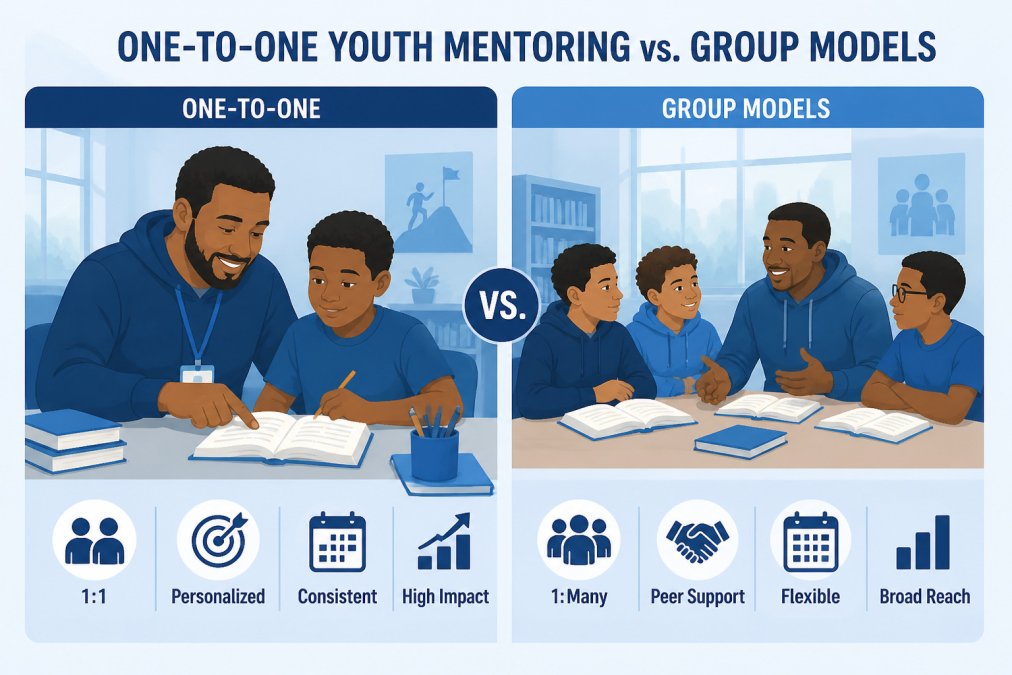
One-to-One Youth Mentoring vs. Group Models
Mentoring programs may use different formats. Our comprehensive guide to youth mentorship in Washington DC compares the broader options available locally. Ask a program what format it offers and how it supports participants.
Youth Mentoring Program Safety Standards and Background Screening
Safety is important to consider. Ask a program to explain its screening and supervision processes and what information it can share.
What a thorough background check includes. Ask a program what screening it conducts and whether checks are repeated.
Screening is more than a database. A background check alone does not describe a program’s full screening process. See how the program’s vetting process works, explained step by step. Ask what other steps, if any, it uses.
Supervision and boundaries. Ask what policies the program has for communication, contact, meeting settings, staff support, and concerns.
Mandated reporting and complaint procedures. Ask how a program handles concerns, how youth or parents can raise them, and what information it can provide about its complaint process.
A program that will not share its screening policy, supervision rules, or complaint procedure in writing is a warning sign. Legitimate programs treat these documents as recruiting material, not secrets.
What families can verify themselves. You can ask what information a program can provide about its organization and policies. For school-based programs, ask how the district vets volunteers.
What prospective mentors should expect. If you are considering volunteering, ask what steps the program requires before volunteers work with youth.
Questions to Ask a Youth Mentoring Program Before Enrolling
The questions below can help you ask about a program and consider whether it fits your family.
Eligibility and fit
- What is the age range, and what program format is offered?
- What eligibility criteria does the program use?
- What support can the program describe for a youth with particular needs?
- What is the expected length of participation?
Mentor recruitment, screening, and training
- What information can the program provide about its approach to mentorship?
- What information can the program provide about its safety policies?
- What information can the program provide about preparation for mentors?
- What information can the program provide about support for mentors?
Matching and support
- How does the program arrange mentorship, and what role can the youth or family have?
- How does the program support participants over time?
- What information can the program provide about staff support and communication?
- How does the program respond when a participant needs additional support?
Outcomes and accountability
- What outcomes, if any, does the program track, and what information can it share?
- What information can the program provide about how it assesses its work?
- What feedback, if any, does the program collect from youth and families?
Cost, access, and logistics
- How is the program funded?
- What information can the program provide about getting to activities?
- What information can the program provide about how activities are delivered?
- What information can the program provide about participation expectations?
Safety and communication
- What information can the program provide about its safety and complaint policies?
- How can families contact the program?
- What information can the program provide about communication with families?
- How can a youth or parent raise a concern?
Score each program on a simple three-column sheet: what they told you, what they showed you in writing, and what they could not answer. The third column is often the most informative.
Red flags worth probing. If you have questions about a program’s policies or participation expectations, ask for specifics before committing your child’s time.
For parents, caregivers, and referring professionals. If you are a teacher, counselor, caseworker, or clergy member considering a referral, ask what information the program can provide about participation and communication. Prepare the youth for what mentoring is and is not, and discuss what they can expect.
When considering a program, ask what information it can provide about its approach and policies.
Enrolling Your Son in a Mentorship Program This Year
When considering a program, ask questions about its approach and whether it fits your son’s age and needs. Involve your son in the decision where appropriate.
Frequently Asked Questions
How do mentorship programs help at-risk youth?
Mentorship programs can provide guidance and encouragement. Ask a program what support it offers and what information it can share about its approach.
How long do youth mentoring relationships usually last?
Relationship length varies by program. Ask a program about its participation expectations and what support it can provide if circumstances change.
What is the difference between mentoring and tutoring?
Tutoring focuses on academic support, while mentoring focuses on guidance, encouragement, and positive role models. The Protégé Project combines academic support and mentorship. When considering a program, ask what support it offers.
What should I look for in a youth mentorship program?
Ask what information the program can provide about its safety policies, participation expectations, and approach to supporting youth.
How do I know if a mentoring program is safe?
Ask what information the program can provide about its safety policies and how parents can raise concerns.
