
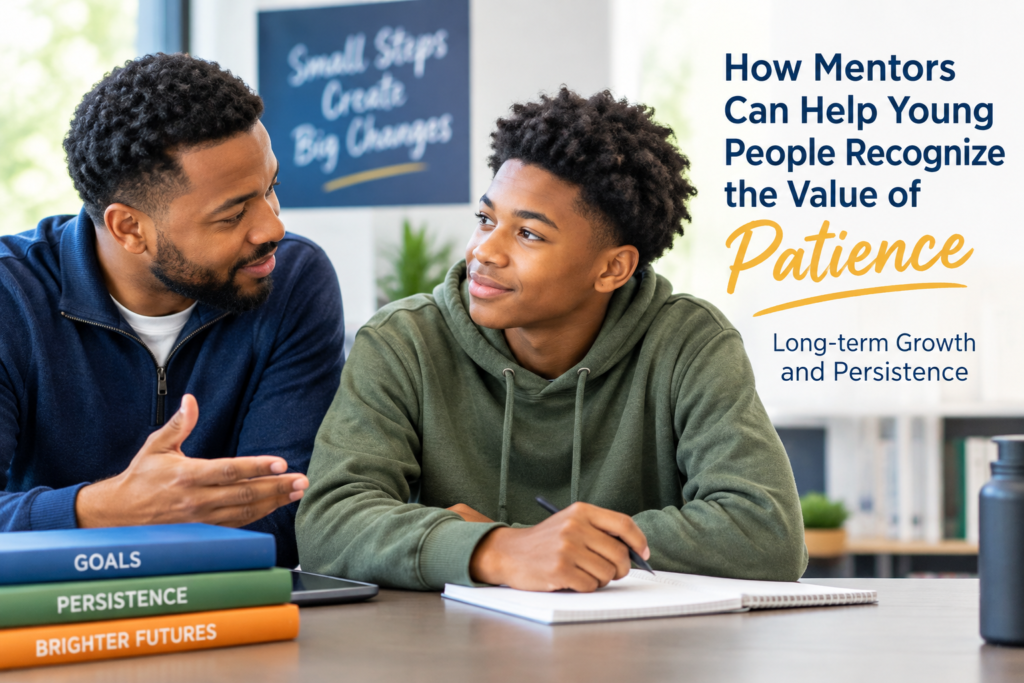
Young people often want to see results quickly. Whether they are learning a new skill, improving their academic performance, building relationships, or working toward a personal goal, waiting for progress can sometimes feel frustrating. When results do not come as expected, they may begin to doubt their abilities or lose motivation. Mentors can help young people understand that meaningful growth takes time and that patience is an important part of achieving lasting success.
Patience is not simply about waiting without doing anything. It involves continuing to make an effort, learning from experience, and understanding that progress does not always happen at the same speed. Through consistent guidance and encouragement, mentors can help teenagers develop a healthier approach to challenges and long-term goals.
Understanding Why Patience Matters
Many valuable achievements require repeated effort before the results become visible. Learning a difficult subject, developing communication skills, improving in sports, or preparing for future career opportunities rarely happens overnight.
Young people may compare their progress with that of friends or classmates and feel discouraged when someone else appears to succeed more quickly. A mentor can help them recognize that everyone develops at a different pace.
Instead of measuring success only by immediate results, teenagers can learn to pay attention to what they are improving along the way. Better preparation, increased confidence, and a stronger understanding of a subject can all represent progress, even when the final goal remains some distance away.
Mentors Can Help Young People Set Realistic Goals
Patience becomes easier to practice when a goal feels achievable and the steps toward it are clear.
A teenager who wants to improve their grades, for example, may expect their performance to change immediately. A mentor can help them create a more realistic plan that includes regular study sessions, asking questions, reviewing difficult topics, and tracking improvement over time.
Breaking a larger goal into smaller steps gives young people opportunities to recognize progress along the way.
It also helps them understand that long-term success is often the result of many smaller actions rather than one major achievement.
Teaching Persistence When Progress Feels Slow
There will be times when young people work hard without seeing the results they hoped for. They may struggle with a new skill, receive disappointing feedback, or find that their first approach does not work.
These experiences can test their patience.
A supportive mentor can encourage them to examine what is happening instead of giving up immediately. They might discuss what the young person has learned, which strategies could be improved, and what practical step to take next.
This approach teaches an important distinction: persistence does not mean repeating the same action without thinking. It means continuing to work toward a goal while remaining willing to learn and adjust.
Helping Teens Learn From Setbacks
Setbacks can make young people question whether their efforts are worthwhile. A missed opportunity or unsuccessful attempt may feel like proof that they are not capable of reaching their goals.
Mentors can help put these experiences into perspective.
For example, if a teenager does not achieve the result they wanted in a school assessment, a mentor can help them review their preparation, identify difficult areas, and develop a more effective study approach.
The focus shifts from disappointment alone to the lessons that can be taken forward.
This connects with the broader value of consistent mentorship in youth development, where ongoing guidance can help young people navigate challenges and continue developing their abilities.
Demonstrating Patience Through Everyday Actions
Young people often learn as much from what adults do as from what they say.
Mentors can demonstrate patience by listening carefully, allowing teenagers time to explain their thoughts, and responding constructively when mistakes occur. They can also show how to approach difficult tasks calmly rather than expecting immediate solutions.
These everyday examples make patience easier to understand.
A mentor who takes time to explain a challenging concept, for instance, demonstrates that learning is a process and that asking questions is a normal part of improvement.
Over time, young people may begin to apply the same attitude to their own responsibilities and relationships.
Encouraging Young People to Focus on Their Own Progress
Comparing achievements with other people can make patience difficult.
A teenager may see someone else earning recognition, developing a skill more quickly, or reaching a goal earlier and conclude that they are falling behind.
Mentors can encourage young people to evaluate their progress against their own previous efforts.
Questions such as “What can you do now that you found difficult before?” or “Which part of this task has become easier?” can help teenagers notice improvements they might otherwise overlook.
This encourages a more balanced view of development.
It also supports confidence by helping young people recognize that improvement does not need to follow someone else’s timeline.
Building Patience Through Responsibility
Patience can be developed through ordinary responsibilities that require consistency.
Completing a project, practicing a skill, helping with a community activity, or contributing to a group effort can teach young people that worthwhile outcomes often depend on repeated actions.
Mentors can encourage teenagers to follow through on commitments even when the work becomes repetitive or less exciting.
For example, a young person helping organize a community event may need to complete several preparation tasks before seeing the finished result. That experience can demonstrate why attention to detail and consistent effort matter.
These lessons can later support responsibilities in education, employment, and adult life.
Learning to Manage Frustration
Patience also involves learning how to respond when things do not happen as expected.
Young people may become frustrated when a task takes longer than planned, when another person disagrees with them, or when they need to repeat something they thought they had already learned.
A mentor can help them pause and consider the situation before reacting.
This might involve identifying what is causing the frustration, separating what can be controlled from what cannot, and choosing a practical next step.
The aim is not to prevent teenagers from experiencing difficult emotions. It is to help them respond to those emotions in ways that support better decisions and healthier relationships.
Connecting Patience With Future Opportunities
Many educational and professional goals require preparation before results become visible.
Young people may need time to develop relevant skills, explore different interests, gain experience, and understand which opportunities fit their strengths.
Mentors can help teenagers look beyond immediate rewards and consider what their current efforts may contribute to their future.
For instance, participating in a youth leadership activity may not produce an immediate qualification or career opportunity, but it can help develop communication, teamwork, and decision-making skills.
Through youth leadership and mentorship in Washington, DC, young people can explore ways to build practical abilities that may support their future goals.
Understanding That Patience Does Not Mean Doing Nothing
An important lesson for young people is that patience should not become an excuse for avoiding action.
Waiting for a goal to happen without making an effort is different from working consistently while accepting that results take time.
Mentors can help teenagers identify actions they can take today, even when the larger outcome remains uncertain.
A student can continue studying. An aspiring athlete can practice. A young person interested in a particular profession can research educational pathways or speak with someone experienced in that field.
This combination of patience and purposeful action helps young people remain engaged with their goals.
How Protégé Project Can Support Long-Term Growth
Youth development is not limited to helping teenagers achieve short-term results. It also involves building habits, attitudes, and skills that can support them as they grow older.
Through mentorship, education, and leadership development, Protégé Project can contribute to environments where young people receive encouragement to keep learning, reflect on their experiences, and approach challenges with greater confidence.
Supportive relationships can help teenagers understand that development is an ongoing process. They do not need to have every answer immediately or achieve every goal on their first attempt.
What matters is having opportunities to learn, access guidance when needed, and continue making meaningful progress.
Helping Young People Trust the Process of Growth
Patience can influence how young people approach nearly every area of life. It can help them remain committed to education, develop stronger relationships, respond more constructively to setbacks, and continue working toward goals that matter to them.
Mentors can reinforce these lessons by setting realistic expectations, recognizing small improvements, demonstrating patience themselves, and encouraging teenagers to learn from experience.
When young people understand that progress often takes time, they may become more willing to face challenges without expecting immediate perfection.
The goal is not simply to teach young people to wait. It is to help them keep learning, making thoughtful choices, and putting in consistent effort while their abilities develop.
With supportive guidance and opportunities to practice persistence, teenagers can build a stronger foundation for long-term growth and future success.